

Keynotes
From Data to Value: Rethinking the Use of Existing Production Data
Markus Brillinger is a mechanical engineer educated at Graz University of Technology, where he also earned his PhD in 2018. His doctoral research focused on the development of a novel 3D printing process, including its successful patenting. From 2018 to early 2026, Markus worked at Pro2Future in the field of Cognitive Production Systems, specializing in digital and data-driven manufacturing. His work focused on enabling industrial companies to make smarter use of existing production data and to implement practical approaches to cognitive and intelligent production. Since autumn 2025, Markus has been a Head of Degree Programmes at FH JOANNEUM, where he is responsible for three study programs. His academic focus lies on “Smart Data Usage,” preparing the next generation of engineers to unlock value from data in industrial environments.
Abstract
Most manufacturers already possess vast amounts of production data—yet much of it remains underutilized. This keynote focuses on how to unlock the hidden value within existing data by shifting from data collection to smart usage. It highlights practical approaches to turn current data into actionable insights, improving efficiency, decision-making, and overall performance—without requiring new data sources.
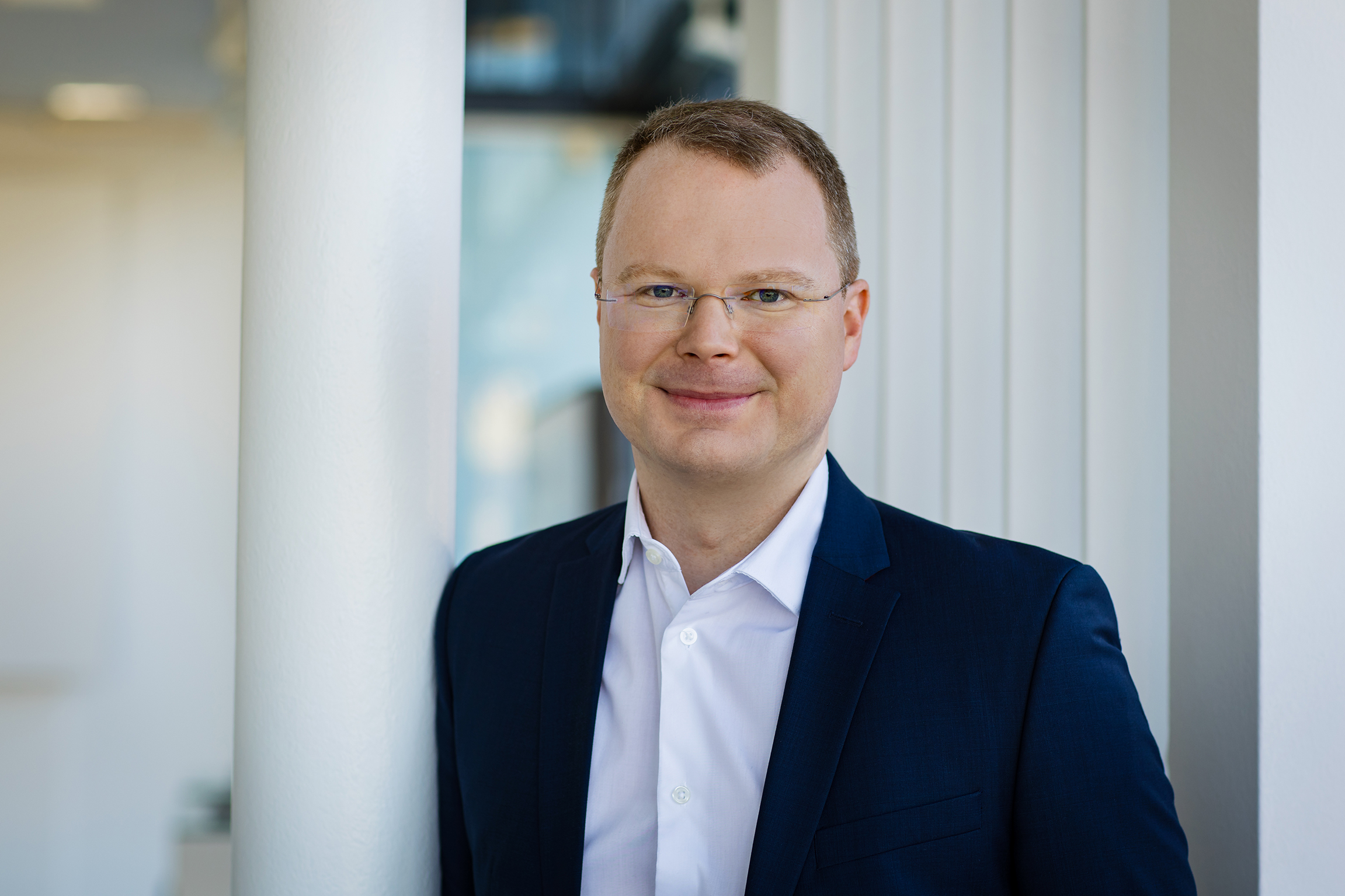
Dr. Markus Brillinger
FH Joanneum - University of Applied Sciences

Nicos Maglaveras
Professor of Medical Informatics Aristotle University of Thessaloniki Greece
Personalised health driven by digital health systems and multi-source health/environmental data, ML/AI/DL analytics and predictive models
Nicos Maglaveras received the diploma in electrical engineering from the Aristotle University of Thessaloniki (A.U.Th.), Greece, in 1982, and the M.Sc. and Ph.D. degrees in electrical engineering with an emphasis in biomedical engineering from Northwestern University, Evanston, IL, in 1985 and 1988, respectively. He is currently a Professor of Medical Informatics, A.U.Th. He served as head of the graduate program in medical informatics at A.U.Th, as Visiting Professor at Northwestern University Dept of EECS (2016-2019), and is a collaborating researcher with the Center of Research and Technology Hellas, and the National Hellenic Research Foundation.
His current research interests include biomedical engineering, biomedical informatics, ehealth, AAL, personalised health, biosignal analysis, medical imaging, and neurosciences. He has published more than 500 papers in peer-reviewed international journals, books and conference proceedings out of which over 160 as full peer review papers in indexed international journals. He has developed graduate and undergraduate courses in the areas of (bio)medical informatics, biomedical signal processing, personal health systems, physiology and biological systems simulation.
He has served as a Reviewer in CEC AIM, ICT and DGRT D-HEALTH technical reviews and as reviewer, associate editor and editorial board member in more than 20 international journals, and participated as Coordinator or Core Partner in over 45 national and EU and US funded competitive research projects attracting more than 16 MEUROs in funding. He has served as president of the EAMBES in 2008-2010. Dr. Maglaveras has been a member of the IEEE, AMIA, the Greek Technical Chamber, the New York Academy of Sciences, the CEN/TC251, Eta Kappa Nu and an EAMBES Fellow.
Abstract
The last years saw a steep increase in the number of wearable sensors and systems, mhealth and uhealth apps both in the clinical settings and in everyday life. Further large amounts of data both in the clinical settings (imaging, biochemical, medication, electronic health records, -omics), in the community (behavioral, social media, mental state, genetic tests, wearable driven bio-parameters and biosignals) as well as environmental stressors and data (air quality, water pollution etc.) have been produced, and made available to the scientific and medical community, powering the new AI/DL/ML based analytics for the identification of new digital biomarkers leading to new diagnostic pathways, updated clinical and treatment guidelines, and a better and more intuitive interaction medium between the citizen and the health care system.
Thus, the concept of connected and translational health has started evolving steadily, connecting pervasive health systems, using new predictive models, new approaches in biological systems modeling and simulation, as well as fusing data and information from different pipelines for more efficient diagnosis and disease management.
In this talk, we will present the current state-of-the-art in personalized health care by presenting cases from COVID-19 and COPD patients using advanced wearable vests and new technology sensors including lung sound and EIT, new outcome prediction models in COVID-19 ICU patients fusing X-Rays, lung sounds, and ICU parameters transformed via AI/ML/DL pipelines, new approaches fusing environmental stressors with -omics analytics for chronic disease management, and finally new ML/AI-driven methodologies for predicting mental health diseases including suicidality, anxiety, and depression.
